Log in


Table of Contents
- What is CBD?
- What is CBN?
- Key Differences Between CBD and CBN
- CBN vs CBD for Sleep: Which is Better?
- How to Choose Between CBD and CBN
- The Bottom Line
If you’ve been up all night researching natural sleep aids, there’s a very good chance you’ve run across CBD and CBN. But which cannabinoid actually works for sleep support? Both come from the same plant and share a similar name, but CBD and CBN serve very different purposes. CBD, or cannabidiol, is a daily wellness tool people use for stress, inflammation, and general relaxation. CBN is turning heads for its potential role in supporting sleep.
Let’s take a closer look at these hemp-derived cannabinoids, which are both federally legal thanks to the 2018 Farm Bill. The thing is, their effects, availability, and the research behind them really set CBD and CBN apart. Let’s do a side-by-side comparison so you have all the information you need to decide which one might work better for you.
What is CBD?
CBD is one of some 100 identified cannabinoids, or compounds, in the cannabis plant. It’s often the second most abundant cannabinoid in these plants after THC (tetrahydrocannabinol), and one of its central claims to fame is that it doesn’t have a psychoactive effect, which means it doesn’t produce the “high” associated with cannabis as a whole (THC gets the credit for that). Instead, CBD has a therapeutic role, with many people using it for stress management, to improve sleep, or to manage chronic pain and inflammation.
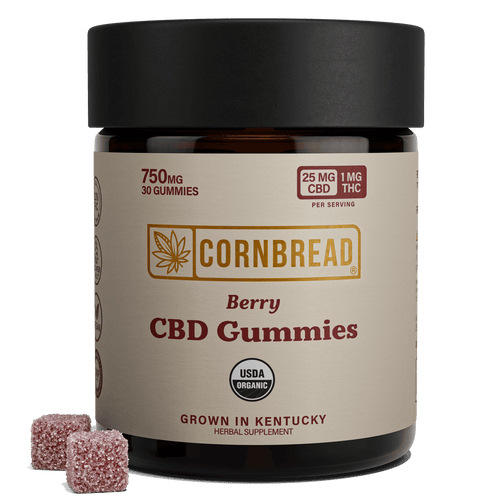
CBD is extracted from hemp plants in several ways, and the resulting oil can be blended into a range of products. Here at Cornbread Hemp, we utilize organic sugarcane ethanol to extract our Flower Only Hemp CBD extract, which is made without leaves or stems, resulting in a higher-quality, better-tasting finished oil. We’re proud to use USDA-certified organic Kentucky hemp in most of our CBD products, including gummies, tinctures, and topicals.
What is CBN?
CBN is considered one of the minor cannabinoids in the cannabis plant because it’s only found in trace amounts. A little science lesson: CBN comes from the degradation of THCa, or tetrahydrocannabinol acid, which happens when cannabis is exposed to air or UV light for prolonged periods. THCa degrades into cannabinol acid, or CBNa, which becomes CBN during the chemical reaction known as decarboxylation. That’s actually why it’s typically found in greater quantities in older cannabis plants.
While CBN is technically psychoactive, it’s subtle enough that it doesn’t have an intoxicating effect (and it’s nothing at all like the euphoria or altered perception typical of THC). Still, in large quantities, CBN can produce mild psychoactive reactions. Usually, though, this cannabinoid creates a sedated effect or a feeling of relaxation. That’s why it’s generating interest for sleep support.
It hasn’t been studied as much as CBD or THC, so information at this point is largely speculative. However, it may offer calming, sleep-supporting benefits, making it an appealing alternative to other sleep aids. It's often described as "the sleepy cannabinoid."

CBD vs CBN: At a Glance
|
CBD |
CBN |
|
|
Source |
Found abundantly in hemp plants |
Found in trace amounts in hemp; forms as THC degrades |
|
Psychoactive? |
No |
Mildly, in high doses |
|
Primary use |
Stress, inflammation, daily wellness |
Sleep support, relaxation |
|
Sleep aid? |
Offers mild support |
Offers stronger sedative effects |
|
Research level |
Extensive |
Limited but growing |
|
Availability |
Widely available |
Specialty products |
|
Federal legal status |
Legal in accordance with 2018 Farm Bill |
Legal in accordance with 2018 Farm Bill |
Key differences between CBD and CBN
While their names are similar, CBN and CBD are separate molecules and differ in structure, origin, and potential effects on the body. Let’s break it down.
Structural differences
As different compounds, CBN and CBD have distinct molecular structures (although the differences are slight). Still, it’s enough to influence how these cannabinoids interact with the receptors in the endocannabinoid system.
We’ve already mentioned that CBD is a primary cannabinoid found in abundance in hemp plants in particular. That means it’s relatively easy to extract in large quantities for CBD products. Plus, it’s possible to breed cannabis plants with higher levels of CBD.
CBN is different. Because it’s created from the breakdown of THC that’s been exposed to heat, light, and oxygen, it’s only found in trace amounts in older cannabis plants. The amounts are so small that CBN must be carefully extracted and concentrated for use in products like tinctures or sleep gummies. That’s why it’s primarily found in specialty sleep products.
Full-spectrum CBD products, like those here at Cornbread Hemp, include the full range of cannabinoids naturally found in the hemp plant, like CBD, up to 0.3% THC, and yep, trace amounts of CBN.
Interaction with the endocannabinoid system
Both CBD and CBN interact with the body’s endocannabinoid system, a complex and extensive network that regulates balance, or homeostasis. Things like appetite, digestion, immune function, stress and pain responses, mood, and memory are all managed by the ECS, which has three parts:
- Endocannabinoids, which are naturally produced on demand
- Cannabinoid receptors (CB1 and CB2), which are located throughout the body
- Enzymes, which limit the production of endocannabinoids and help break them down after they’ve interacted with receptors
The interesting thing is that cannabinoids from the cannabis plant mimic the endocannabinoids produced in the body, which is why they’re capable of interacting with the ECS. Researchers are still puzzling out exactly how this happens. Still, they believe that CBD influences CB1 and CB2 receptors indirectly rather than binding directly to them (CB1 receptors are mostly found in the brain and nervous system, while CB2 receptors are primarily clustered in the immune system and peripheral tissues). That’s why it has therapeutic effects.
CBN, on the other hand, appears to interact lightly with CB1 receptors. The same is true of THC, though its interaction is much stronger, creating a strong psychoactive effect. The effect of CBN is much more subtle. This cannabinoid may also interact with CB2 receptors, which are associated with inflammation and immune function.

Effects
Because CBD and CBN interact differently with the ECS, their effects are likewise different. People use CBD for multiple reasons, including stress management, reducing inflammation, and promoting general relaxation. Some people use it as part of their daily wellness routine to encourage a sense of calm. Others use it to target anxiety, insomnia, and chronic conditions.
Remember, CBD isn’t psychoactive, and it’s widely available thanks to the 2018 Farm Bill, so it’s appealing to people who want to benefit from the effects of the cannabis plant but avoid any intoxicating effects.
CBN isn’t as well studied, so there is limited scientific evidence; however, anecdotal evidence suggests it can be used as a sleep aid and to help manage pain. That’s thanks to CBN's sedative properties, which are stronger than CBD's and make it easier to stay asleep.
Regarding pain relief, a 2019 rodent study found that both CBD and CBN reduced myofascial pain in rats. While human clinical trials are warranted, researchers concluded that these cannabinoids could be effective at relieving pain from fibromyalgia and certain disorders.
Legality of CBD and CBN
CBD and CBN are both legal on a federal level and in most states because of the 2018 Farm Bill, which legalized hemp-derived products that contain less than 0.3% THC. Still, state laws can and do vary. Some have restrictions on hemp-derived cannabinoids or specific testing requirements. That's not a bad thing since quality control for CBD and CBN products can vary pretty significantly.
Remember to check your state's laws before purchasing or using CBD and CBN products, and always look for brands that provide certificates of analysis from third-party labs. That's the only way to ensure that the products are safe to use and legally compliant.
CBN vs CBD For Sleep: Which is Better?
Sleep is where the differences between CBD and CBN are really obvious. It’s also where CBN may have the edge. Dr. Fred Peters, senior medical advisor at Cornbread Hemp, calls CBN the more targeted cannabinoid for nighttime sleep support. “CBD is broader and may fit into general relaxation, stress management, and wellness routines,” he adds.
CBD can support sleep indirectly. It helps reduce anxiety and promote relaxation, which may help you wind down before bed. Actually, that’s why a lot of people use CBD as part of their nighttime routine. But CBD doesn’t have direct sedative effects. That means its sleep benefits are mostly a downstream effect of stress relief.
CBN is more targeted. Its sedative properties are stronger than CBD’s, so it’s better suited to people who struggle to stay asleep, not just to unwind. Research remains limited, but a 2024 double-blind, placebo-controlled, randomized study found that 20mg of CBN reduced nighttime awakenings and overall sleep disturbances compared with placebo. That’s a meaningful find for anyone dealing with fragmented sleep. Notably, the same study did not find a significant improvement in sleep onset—meaning CBN may be more useful for staying asleep than for falling asleep faster.
While Dr. Peters is quick to note that CBN isn’t a cure for insomnia, it is a promising cannabinoid for sleep support, especially for those who often wake during the night.
One thing to keep in mind is that CBD and CBN aren’t mutually exclusive. Full-spectrum CBD products, like those here at Cornbread Hemp, have, well, the full spectrum of cannabinoids in the hemp plant, including up to 0.3% THC and all of the minor cannabinoids. If you're investigating CBN for its sleep benefits, our CBD Sleep Gummies might be worth a look. Still, we recommend consulting your healthcare professional if you need help figuring out the best course of action.
How to choose between CBD and CBN
At this point, you might be wondering whether CBD or CBN is better for you.
“CBD may be a better starting point for someone looking for general relaxation,” says Dr. Peters, “while CBN may be more targeted for nighttime sleep support, especially if their main issue is waking throughout the night.”
In other words, like all things cannabis, it really comes down to individual needs and preferences:
- Choose CBD if you're looking for broad daily wellness support—stress relief, inflammation management, or general relaxation.
- Choose CBN if sleep is your main issue, especially if you struggle with nighttime awakenings or overall sleep quality.
- Consider both via a full-spectrum CBD product if you want well-rounded support without having to choose.
“For many healthy adults, taking CBD and CBN together appears to be reasonable when used responsibly and at appropriate doses,” says Dr. Peters. But he cautions that people should start with low doses and avoid alcohol and other sedatives. He also recommends speaking with a healthcare professional if you take prescription medication, have liver disease, are pregnant, or have a complex medical history.
One more thing to remember—cannabinoids aren’t a replacement for good sleep habits. According to Dr. Peters, the timing of caffeine, alcohol use, evening light exposure, stress, exercise, and sleep consistency still matters. “CBD and CBN may be helpful tools within a broader nighttime routine, but they’re supportive rather than curative,” he adds. In other words, you should definitely make a point of embracing sleep hygiene best practices.
The Bottom Line
In the CBN vs CBD debate, there's really no clear winner. “CBD is broader and better studied; CBN is more sleep-focused but less researched. Both should be used thoughtfully as part of a complete sleep-supportive routine,” says Dr. Peters.
Choosing between these cannabinoids ultimately comes down to what you hope to accomplish. CBD and CBN both offer potential benefits, so consider what matters most to you. Traditionally, CBD is used for everyday support, especially for stress relief and relaxation. CBN, on the other hand, is known for its calming and sleep-supportive qualities, making it a natural sleep aid.
The best of both worlds may be a full-spectrum CBD product that gives you the benefit of the entourage effect, which is what you'll find right here at Cornbread Hemp.