Log in


Table of Contents
- What Are CBD Gummies? A Simple Explanation for New Users
- How Do CBD Gummies Work in the Body?
- What Do CBD Gummies Do? Main Benefits Explained
- How Much CBD Should You Take? Dosage Guide for Beginners
- Are CBD Gummies Safe? Side Effects & Safety Tips
- Types of CBD Gummies: Which One Should You Choose?
- CBD Gummies vs THC Gummies: Key Differences
- Are CBD Gummies Legal? Updated Regulations
- How to Choose the Best CBD Gummies
- How to Store and Use CBD Gummies the Right Way
- Final Tips for New Users
Everyone knows about gummy bears, gummy worms, and even gummy sharks. But what about CBD gummies? With a question like that, you’re probably new to the CBD world. Good news—CBD gummies are a great introduction. These CBD-infused candies with the signature gummy texture might be the most convenient, flavorful way to get your daily dose of cannabidiol.
Of course, there’s more to CBD gummies than fruity flavors and a chewy bite. In this simple guide, we’re covering everything you need to know about CBD gummies, including how they’re made, how to shop safely, and how to enjoy them best.
What Are CBD Gummies? A Simple Explanation for New Users
The name explains it well. CBD gummies are small, chewy, fruit-flavored bites, and they’re infused with CBD oil that’s extracted from hemp plants. CBD is non-intoxicating, so it doesn’t produce the euphoric effects (AKA the “high”) strongly associated with cannabis and THC.
How CBD Gummies Are Made (and What’s Inside)
The exact process varies slightly by brand. But here at Cornbread Hemp, our CBD gummies are made with an organic extraction process on organic, non-GMO hemp flowers. That’s what gives us the most natural, most potent, and dare we say, most beautiful full-spectrum hemp extracts.
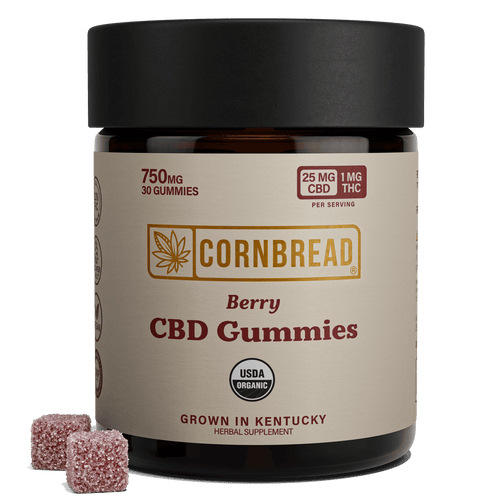
To make our gummies, we start by blending the extract with organic fruit flavors and other vegan ingredients, like apple pectin, until everything is evenly incorporated. This liquid goes into a tray mold and then into the refrigerator, where it stays until it sets. That’s when pectin goes to work, expanding fibers and firming up each gummy. Once the gummies are set, we roll them in cane sugar crystals and bottle them in amber glass jars with child-proof lids. Our CBD gummies come in 30-count bottles, with 25-100mg of CBD per gummy.
CBD Gummies vs Other CBD Edibles: What’s the Difference?
CBD edibles are a big, popular category that describes any food or beverage made with CBD. That includes chocolates, baked goods, seltzers, coffees and teas, honeys and olive oils, and yes, gummies.
CBD gummies stand out because they’re conveniently pre-dosed, discreet, and come in options for strengths and formulas. That makes them especially beginner-friendly. Other types of edibles tend to be less about consistency and precision and more about flavor profiles and experience.
Are CBD Gummies the Same as Hemp Gummies?
This is where things can get confusing. CBD gummies contain actual CBD, or cannabidiol, which is a cannabinoid found in hemp plants. That CBD is from hemp extract.
Hemp gummies are typically made with hemp seed oil, not CBD. Hemp seed oil comes from hemp plants, but it doesn’t contain CBD or THC.
Here’s an easy way to differentiate CBD gummies from hemp gummies—check the label for the CBD dosage in milligrams. If you don’t see it, it’s probably because it’s not a CBD product at all.
How Do CBD Gummies Work in the Body?
CBD gummies produce effects in the body by influencing systems that maintain balance. And it’s all thanks to the endocannabinoid system, or the ECS.
What CBD Does to Your Endocannabinoid System
The ECS is a regulatory network in the body that manages sleep, mood, pain, stress responses, immune signaling, and much more. Its job is to keep all these systems—and the body as a whole—running in balance (1).
When you feel “off,” it can be a sign that your ECS isn’t running quite as well as it should. That might be due to stress, illness, poor sleep, aging, and even regular ol’ wear and tear. These things make it harder for the ECS to work efficiently.
CBD doesn’t directly interact with the ECS the way THC does. But it does support this system by helping it respond more effectively to signals from the body. By helping the ECS run more smoothly, CBD also helps support balance.
How Fast Do CBD Gummies Work?
CBD gummies don’t have immediate effects, and when they do begin interacting with the body, it’s pretty subtle. That’s especially true for first-time users or with low doses. For many people, CBD actually becomes more noticeable the more consistently you use it.
An edible product like gummies works via the digestive system, which slows down the onset of effects. It can take 30 to 90 minutes for CBD to enter the bloodstream and begin affecting different systems.
Even then, there’s no grand effect when you suddenly realize it’s working. Instead, most people notice that effects are quite subtle—a loosening of tense muscles, a calmer mind, or stress that feels a little more manageable.
How Long Do CBD Gummies Last?
While CBD gummies take time to kick in, their effects tend to last longer. Most people notice them for 6 to 8 hours, but that can vary based on dose, metabolism, and individual response.
What Do CBD Gummies Do? Main Benefits Explained
Because of their subtle effects, many people use CBD gummies as part of a daily wellness routine. You can find CBD gummies designed for specific benefits, such as relaxation, sleep, pain relief, and mood support.
CBD Gummies for Relaxation & Stress Relief
Relaxation and stress relief are among the most common reasons people turn to CBD gummies, especially at the end of a long day. They don’t eliminate stress, but they may help the body manage it more calmly. Reducing tension and stress makes it easier to feel relaxed.
CBD Gummies for Sleep: Do They Help?
CBD gummies for sleep are often used as part of a nighttime relaxation routine. CBD itself isn’t a sedative, but for some people, its calming effect can create a more settled, relaxed state before bed.
Some people also report that CBD gummies for sleep help them enjoy more restful nights overall. That’s most common when restlessness or stress is making it harder to fall and stay asleep.
CBD Gummies for Pain or Inflammation — What Users Report
Some people take CBD gummies to support recovery and overall comfort. Common reports include improved mobility, reduced stiffness, and greater comfort during physical activity.
Remember, CBD doesn’t target pain directly. Instead, it can help support the body’s own pain response. That’s one likely reason that effects are so gradual. But consistency really is key. Most people who notice improvement with pain or inflammation take CBD gummies daily as part of a broader wellness approach.
Mood, Calmness & Overall Wellness Effects
Beyond specific goals like stress relief, recovery, and sleep support, some people take CBD gummies for more general wellness effects. Many people say they help with emotional balance, a steadier mood, and more resilience in the face of daily stressors.
Again, these effects are subtle and gradual. Instead of a dramatic change, you’re more likely to realize that you’re simply managing things a little better.

How Much CBD Should You Take? Dosage Guide for Beginners
There’s no universal dosage guide for CBD. Everyone is a little different, and individual factors like metabolism, body weight, what you’re hoping to support, and experience level with CBD all dictate an appropriate dose.
But as with all things related to hemp and cannabis, the best approach is to start low and go slow. Remember that CBD gradually influences the endocannabinoid system, so consistency is more effective than a single large dose.
How Many CBD Gummies Should You Start With?
Most research on effective dosages starts at around 20mg per day (2), but individual mileage varies. Check serving sizes so you’re clear on how many gummies you need for a starting dose, like 10-20mg.
CBD Dosage Chart by Strength (Low, Medium, High)
Remember that CBD dosage is personal, but guidelines can be a useful starting point.
|
Experience Level |
Daily CBD Amount |
Who It’s Best Suited For |
|---|---|---|
|
Low |
5-10mg |
Beginners, those looking for mild support |
|
Moderate |
10-25mg |
General wellness, sleep support, moderate stress |
|
High |
25-50mg |
Experienced users, those in need of stronger support |
Can You Take Too Many CBD Gummies?
Yes. Too much CBD extract may cause mild side effects, like intestinal discomfort or grogginess in the morning. But even with high doses, you won’t feel “high,” since CBD isn’t intoxicating. And even extremely high doses, like 1,500mg per day, are well tolerated by humans, according to studies (3).
CBD can also interact with some medications (4). If you’re on prescription medications, especially those with a grapefruit warning, talk to your healthcare professional before you try CBD.
Are CBD Gummies Safe? Side Effects & Safety Tips
CBD gummies are generally considered safe for most healthy adults, including when taken daily in moderate amounts. But “safe” doesn’t mean there are no potential side effects, so here’s what to know.
Common Side Effects (Mild and Temporary)
CBD gummies can have side effects, but they’re usually mild and temporary. It’s possible to feel drowsy, experience appetite changes, or notice a dry mouth or some digestive discomfort. With high doses, it’s also possible to become a little lightheaded.
All of these side effects are more likely at higher doses, which is why it’s so important to start with a low dose and gradually increase over time. If you notice side effects, try reducing your dose.
Who Should Avoid CBD Gummies?
Some people probably shouldn’t take CBD gummies. If you take prescription medications or have a preexisting health condition, or you’re pregnant or breastfeeding, you definitely need to talk with your doctor first.
Can CBD Gummies Make You Fail a Drug Test?
It’s possible, but unlikely, that CBD gummies will mean a positive drug test. CBD itself isn’t screened with standard drug tests, which generally look for active THC or THC metabolites.
But there are trace amounts of THC in full-spectrum CBD (under 0.3% to be federally compliant). If you’re a prolific consumer of high-dose, full-spectrum CBD gummies, there’s a chance that THC could build up over time to the point that it’s detectable on a test.
If you’re worried about that, you might consider broad-spectrum CBD gummies. Still, remember that there’s always a risk here, so be very clear on your employer’s stance.
One more tip—opt for CBD products from trusted, reputable brands, and always check for a current certificate of analysis to ensure what’s listed on the packaging is reflected in the gummy.
Types of CBD Gummies: Which One Should You Choose?
CBD gummies come in different forms, which can influence their effects. The biggest difference between CBD types is what hemp compounds are present or excluded during processing.
Full-Spectrum CBD Gummies
Full-spectrum CBD contains all of the compounds from the plant, including trace amounts of THC (tetrahydrocannabinol), terpenes, flavonoids, and oils. That supports what’s known as the entourage effect, or all of these compounds working together for the greatest efficacy.
Effects from these gummies tend to be more well-rounded, and thanks to the entourage effect, they may also be more effective at lower doses than isolate gummies.
Broad-Spectrum CBD Gummies
Broad-spectrum CBD includes all of the naturally occurring compounds in the hemp plant with the exception of THC. Effects are similar to full-spectrum gummies: calming and non-intoxicating.
For people who want to limit even small amounts of THC, this is a popular option.
CBD Isolate Gummies
CBD isolate contains no compounds from the hemp plant aside from CBD. It's just pure CBD. Effects are often mild and less noticeable physically. Dosages are usually slightly higher because CBD isolate is often considered less potent than full- or broad-spectrum CBD.
CBD + Melatonin, CBN, Ashwagandha — Multi-Functional Gummies
Some CBD gummies include additional ingredients, like herbs, vitamins, adaptogens, or other cannabinoids, for targeted benefits in what’s known as “functional” or “multipurpose” gummies.
Popular examples include gummies that combine CBD and melatonin to support sleep, or CBD and ashwagandha for stress relief. CBD and CBN (cannabinol, a minor cannabinoid in hemp) tend to be promoted for nighttime relaxation.
CBD Gummies vs THC Gummies: Key Differences
CBD gummies are different from THC gummies, which means their effects on the body are different as well. The biggest difference? Intoxication.
Will CBD Gummies Get You High?
No, CBD gummies are non-intoxicating, so you don’t experience a “high.” THC, however, is psychoactive, and it does produce a “high.” That’s characterized by euphoric feelings, altered perception, impaired coordination, and deep physical relaxation.
How CBD and THC Feel Different
There’s no sense of impairment from CBD, and effects are much more subtle. You’re likely to feel reduced physical tension and a calmer state of mind, but you should be clear-headed overall. It’s possible that with very high doses of full-spectrum CBD, you could feel a little more relaxed than usual, but it’s not comparable to the intoxicating effects of THC.
With THC, you’re more likely to feel noticeably altered. That’s the result of the very tight bind between THC and CB1 receptors in the endocannabinoid system.
What About Delta-9, Delta-8 & Other Hemp Cannabinoids?
Delta-9 THC is simply THC. In full-spectrum CBD gummies, delta-9 THC is federally legal if it doesn’t exceed 0.3% THC by dry weight, though legality varies in individual states.
Delta-8 THC is less intoxicating than delta-9, but it’s still intoxicating. It occurs in very low levels in hemp plants, so delta-8 products use a synthesized version that poses potential health risks. Many states have taken steps to prohibit delta-8 THC.
Other hemp cannabinoids, like CBN (cannabinol), CBG (cannabigerol), and THCV (tetrahydrocannabivarin) are also being researched for potential benefits.

Are CBD Gummies Legal? Updated Regulations
CBD gummies are legal in the US when they meet specific conditions. It really comes down to where the CBD comes from and how much THC is included.
Federal Hemp Law Explained Simply
The 2018 Farm Bill (5) legalized hemp at a federal level, removing it from the Controlled Substances Act and defining it as cannabis that contains less than 0.3% delta-9 THC by dry weight.
That’s why hemp-derived CBD products that meet the THC threshold are federally legal, while marijuana-derived CBD products are not. Since individual state laws also vary, those same products might or might not be permitted in different parts of the country. Kind of confusing, isn’t it?
State-by-State Considerations
The best way to understand what’s allowed where you live is to check current laws in your state. Different states have their own regulations regarding THC limits, product types, age restrictions, and retail sales. While most states permit hemp-derived CBD gummies, regulations change quickly!
TSA Rules — Can You Travel With CBD Gummies?
Technically, the TSA (Transportation Security Administration) follows federal law, which means hemp-derived CBD products with less than 0.3% delta-9 THC are allowed in carry-on and checked luggage (marijuana-derived products definitely are not).
You should avoid taking CBD products on international travel, since cannabis laws vary and many countries are more prohibitive.
How to Choose the Best CBD Gummies
You shouldn’t skimp on quality when it comes to CBD gummies. And the truth is, there are many inferior products out there. It’s worth checking for potency, ingredient transparency, and third-party testing to ensure you’re getting a safe, reliable product.
What to Look for on the Label (CBD mg, Type, Cannabinoid Ratio)
There are a few things that should be really easy to find when you’re comparing CBD gummies.”
- CBD potency (in milligrams) per gummy and per bottle. Double-check that the serving size is clearly listed as well. If you can only find vague references, like “high potency,” without specific milligram content, find a different brand.
- CBD type. The label should clearly indicate whether the product uses full-spectrum, broad-spectrum, or isolate CBD.
Why Certificate of Analysis (COA) Matters
Always check for a current COA from a third-party lab. That’s the best way to confirm that the CBD potency matches what’s on the label, that the THC levels are compliant, and that the product is free of contaminants like solvents, pesticides, and heavy metals.
Organic Ingredients, Sugar Levels & Flavor Options
CBD isn’t the only ingredient in a gummy, so scan the label to see what else is being used.
You may want to steer clear of artificial dyes, high amounts of sugar, high-fructose corn syrup, and fillers, especially if you’re incorporating CBD into your wellness routine.
Red Flags & What to Avoid When Buying CBD Gummies
No third-party lab testing is the biggest red flag when you’re buying CBD gummies, along with unrealistic health claims, no clear dosage on the label, and extremely low prices. A lack of transparency should make you pause, too.
The most reputable companies are very upfront about the source of their hemp, their production processes, their test results, and what you can expect from their products.
How to Store and Use CBD Gummies the Right Way
Cannabinoids like CBD degrade when exposed to heat, light, and air, so proper storage is important for maintaining potency, quality, and flavor.
Shelf Life and Storage Tips
Keep CBD gummies fresh by storing them in a cool, dark place. The container should be sealed tightly. And don’t forget them in your car! Heat will turn individual gummies into a sticky mess.
Most CBD gummies have a shelf life of 12 to 24 months, but always check the label for an expiration date. If they look or smell weird, play it safe and toss them.
Best Time of Day to Take CBD Gummies
Like dosage, the best time of day to take CBD gummies is personal and depends on your goals. If you’re looking for daytime support, the morning or early afternoon is best. If you’re taking CBD to support sleep, take it 30 to 60 minutes before bedtime.
Those using CBD for general wellness should aim to take it daily at the same time. Just remember that consistency is more important than timing.
Final Tips for New Users
When you’re brand new to CBD, the most important thing to understand is that effects are subtle and gradual, not dramatic and immediate.
Start Low, Go Slow — Beginner Strategy
We’ve said it before, and we’ll say it again: start low and go slow! A good beginner dose is 5 to 10mg per day. Try that for a few days, and if you don’t notice anything, try increasing the dose by 5-10mg.
Continue gradually adjusting as needed, but avoid jumping to a high dose right away. The idea is to use the lowest effective dose, so be prepared for a little trial and error.
How to Track Your CBD Effects
Since effects are subtle and dialing in your dose takes a little experimentation, it can be helpful to track how you feel and what you’re taking.
Jot down the dose, when you take it, and keep notes on sleep quality, stress levels, physical comfort, and mood changes. Over a few weeks, that can give you really helpful details.
When to Try a Higher Strength or Different Formula
If you aren’t noticing any change after a week or two at the same dose, or if you want to target something specific, it might be time to increase your dose or try a new formula.
Remember that it’s best to speak with your doctor first if you have any health issues or if you currently take prescription medication.