Log in


Table of Contents:
- Can CBD Gummies Be Addictive? What Science Actually Says
- Difference Between CBD, THC, and Hemp Gummies in Terms of Addiction
- What Makes a Substance Addictive? Understanding Cravings, Tolerance, and Dependence
- Do CBD Gummies Cause Withdrawal or Side Effects?
- Why Some People Think CBD Gummies Are Addictive
- Can Taking Too Many CBD Gummies Be Harmful?
- Are CBD Sleep Gummies More Habit-Forming?
- Is It Safe to Take CBD Gummies Every Day?
- How to Use CBD Gummies Responsibly
- Final Answer: Are CBD Gummies Addictive?
People across the country take CBD gummies for general wellness or to support specific goals, such as a calmer state of mind, better sleep, or less stress. But if you’re new to the world of CBD, it’s normal to wonder, are CBD gummies addictive?
It’s a fair question! It’s helpful to understand what science says about addiction risk, what differentiates CBD from THC, and how best to incorporate CBD gummies into your routine safely and responsibly.
Can CBD Gummies Be Addictive? What Science Actually Says
When people wonder whether CBD gummies are addictive, they’re usually wondering whether taking CBD leads to compulsive use or causes withdrawal symptoms if they stop taking it.
Fortunately, there’s a lot of research on the subject of CBD’s potential for addiction—and the findings should be quite reassuring.
Is CBD addictive on its own?
No. Research shows that CBD, or cannabidiol, isn’t addictive (1). A report from the World Health Organization is pretty straightforward: “In humans, CBD exhibits no effects indicative of any abuse or dependence potential” (2).
It’s also not intoxicating, which is a major differentiator between CBD and THC, or tetrahydrocannabinol. While THC reinforces the brain’s reward response, which is what creates those euphoric feelings associated with a “high,” CBD doesn’t have that effect.
How CBD interacts with the brain and receptors
The nuances of cannabis can be a little confusing, especially for people who aren’t overly familiar with CBD and THC. Both cannabinoids come from cannabis plants, but they influence the body’s endocannabinoid system in their own ways.
The endocannabinoid system is the body’s regulatory system, working to maintain balance in functions such as mood, appetite, pain perception, immune response, and sleep. It’s a complex signaling network composed of three parts:
- Endocannabinoids are compounds created in the body
- Enzymes are metabolic proteins that create and break down endocannabinoids
- Receptors are special cells that interact with endocannabinoids to trigger responses across the body
Phytocannabinoids like CBD and THC, which come from cannabis, are very similar to endocannabinoids. But while THC binds directly to CB1 receptors in the brain to create effects, CBD has a more indirect approach.
It seems to influence how the body processes its own endocannabinoids, and it may interact with receptors outside the endocannabinoid system, such as those for serotonin and temperature. That might be why it supports the body’s natural systems.
Do CBD edibles cause dependence or withdrawal symptoms?
No, most people don’t experience dependence or withdrawal symptoms if they stop taking CBD, even abruptly.
Still, it is possible to notice a difference in how you feel if you stop taking CBD after routine use, especially if you found it helped you feel calmer or more balanced. But true dependence on a substance addiction involves psychological and behavioral changes (3), and there’s no evidence of that from CBD.

Difference Between CBD, THC, and Hemp Gummies in Terms of Addiction
While CBD, THC, and hemp gummies are sometimes lumped together, they describe different products with different risks.
Can THC gummies be addictive compared to CBD gummies?
Unlike CBD gummies, THC gummies can be addictive. That’s because THC itself can encourage dependence. When it binds to CB1 receptors in the brain, it triggers the release of dopamine. That’s a reward pathway, and it’s the same one used in nicotine and alcohol addiction.
Using THC regularly can lead to an increased tolerance and, in some people, cravings and mild withdrawal symptoms like sleep issues, appetite issues, and general irritability. It’s known as cannabis use disorder (4), and it doesn’t happen with CBD.
Hemp gummies vs CBD gummies: Is there an addiction risk?
No. They’re different products, but neither hemp gummies nor CBD gummies pose an addiction risk.
Hemp gummies are usually made with hemp seed oil, not CBD. They’re full of healthy fats and trace nutrients, but no cannabinoids, which means no addiction risk.
CBD gummies do contain CBD from hemp extract, but as we’ve covered, this cannabinoid isn’t addictive either.
Why full-spectrum gummies may show different effects
Full-spectrum gummies are made with full-spectrum CBD, which contains all of the naturally occurring compounds in the hemp plant—including up to 0.3% delta-9 THC by dry weight in accordance with the 2018 Farm Bill.
It’s a very low amount of THC, and it’s not usually enough to cause intoxication. But if you’re incredibly sensitive to THC, you could experience very subtle effects, especially with higher doses.
As for addiction risk, it’s unlikely. Still, because they contain THC, full-spectrum CBD products carry more theoretical risk than broad-spectrum CBD and CBD isolate, both of which exclude THC.
What Makes a Substance Addictive? Understanding Cravings, Tolerance, and Dependence
Let’s get into the nitty-gritty of substance addiction and why it’s really not an issue with CBD.
The science of addiction: dopamine, reward system, and habits
A substance addiction is a neuropsychiatric disorder in which someone has an ongoing desire to continue taking a substance in spite of its harmful consequences (3). It affects both brain and behavior.
Most addictive substances spike the brain’s dopamine reward pathway, which makes the brain register the experience as rewarding(5). Over time, that positive association can lead to repeated use, cravings, compulsive behavior, and reduced sensitivity.
Substances like nicotine, alcohol, opioids, and THC in high amounts trigger this pathway, but CBD does not.
Can you build tolerance to CBD gummies?
It’s possible for the body to become less responsive to a substance over time. In that case, you need higher doses for the same effect. But research shows that CBD doesn’t appear to produce a significant tolerance, even when it’s taken in small amounts (6).
That’s also expressed in the report from the World Health Organization: “In humans, CBD exhibits no effects indicative of any abuse or dependence potential” (2).
Psychological vs physical dependence: what applies to CBD?
Psychological dependence describes feeling like you need something to function, even if you don’t experience physical effects.
Physical dependence is withdrawal symptoms like nausea, sweating, insomnia, agitation, or tremors that you experience when you stop taking a substance.
CBD doesn’t cause either, but again, you may find that you feel different if you stop taking CBD if it’s been a part of your routine. If it was supporting better sleep, you may find that your sleep quality changes once you stop. If it was helping you manage daily stress, you might feel a little more tense. But neither of these scenarios qualifies as addiction.
Do CBD Gummies Cause Withdrawal or Side Effects?
Good news—CBD gummies don’t cause withdrawal or side effects for most people.
What happens if you stop taking CBD suddenly?
If you stop taking CBD suddenly, most people won’t experience any kind of withdrawal pattern, like cravings or physical symptoms.
But it’s possible that you could experience an uptick in the very symptoms that prompted you to try CBD in the first place. Smoother sleep could become disrupted again, or daily stress might feel less manageable.
The big exception here is people who are taking prescription CBD for seizure disorders. If that’s the case, speak to your healthcare professional before making any changes.
Common side effects of CBD gummies (according to studies)
While CBD has a very strong safety profile, it isn’t entirely without possible side effects (7). For most people, they’re minor and temporary. They’re also more likely in higher doses or when they’re combined with other medications. These effects include:
- Drowsiness
- Appetite or weight changes
- Digestive discomfort, such as diarrhea or an upset stomach
It’s also important to note that CBD can interact with certain medications and affect how they’re processed in the body. If you take prescription medications, talk to your doctor before trying CBD gummies.
Are there long-term risks with daily CBD use?
It’s unlikely, though long-term research is ongoing. The biggest potential issue is liver health, especially if you take high doses of CBD or if there are any interactions with medications.
The more likely scenario is risk related to poor-quality products. That’s one reason that it’s so important to use CBD products from reputable brands that prioritize transparency and third-party testing
Why Some People Think CBD Gummies Are Addictive
If research is clear that CBD gummies aren’t addictive, why is it a concern at all? There’s quite a bit of overlap between CBD and daily wellness, and it raises questions about habits and preferences. That can veer into addiction territory if you don’t have all of the facts.
Taste, sugar, and ritual: behavioral attachment explained
The thing about CBD gummies is that they look and taste like candy. They’re sweet and pleasing to eat, unlike other forms of CBD, like a capsule you swallow whole or a tincture you hold beneath your tongue.
CBD gummies are their own little sensory experience, and that’s the kind of thing we tend to build habits around. But taking a bedtime CBD gummy, and even looking forward to it, isn’t a sign of addiction. It’s actually behavioral reinforcement, just like a cup of coffee in the morning or a vitamin you take after breakfast.
Misunderstandings about cannabis products
The word cannabis itself can be confusing for many people. Just remember that not all cannabis-derived products contain THC, and that CBD and THC behave very differently, even though they come from the same plant.
Marketing claims vs scientific reality
Marketing claims that suggest CBD gummies have distinct medical benefits and you “need” them to function at your best are misleading. Worse, they create the impression that you’re setting yourself up for problems if you stop using them.
Remember the science—CBD isn’t associated with a potential for addiction or withdrawal. It may have therapeutic benefits, but it’s not a miracle cure.

Can Taking Too Many CBD Gummies Be Harmful?
CBD isn’t addictive, but you can still overdo it on the CBD gummies. The idea is to take the lowest effective dose, since taking more than you need doesn’t really improve results. Plus, it can lead to side effects.
Overuse risks: fatigue, drowsiness, digestive issues
If you take a higher CBD dose than your body needs, you’re more likely to experience side effects like fatigue, sluggishness, digestive discomfort, and nausea.
That’s why it’s best to start with a low dose and gradually increase over time. It’s the easiest way to find your optimal dose, which is unique to you and depends on individual factors.
How much CBD is considered a safe daily dose?
There is no universal “safe” dose for everyone. It all comes down to personal details like body weight, metabolism, why you’re taking CBD, your sensitivity to cannabinoids, and any other medications or supplements you're taking.
In clinical studies, CBD doses have been used safely in the range of 20mg to several hundred. But for personal wellness routines, most people start with about 10mg and gradually adjust.
Signs you might be taking more CBD than necessary
More CBD isn’t necessarily better. Since higher doses are more likely to cause side effects, you may want to dial back your dose if you’re noticing excessive fatigue, stomach upset, low energy, or no additional benefits at all.
In many cases, a low dose actually works better than a high one. Remember that effects are subtle, and upping your dose because you’re chasing stronger sensations can sometimes be a sign that you need to re-evaluate what you’re doing.
Are CBD Sleep Gummies More Habit-Forming?
CBD sleep gummies aren’t always more habit-forming, but they are tied to bedtime routines, which can mean there’s psychological reinforcement at play. Plus, many versions include added ingredients that support sleep, like melatonin, herbal extracts, or magnesium.
Do CBN or melatonin combinations change dependence risk?
CBN, or cannabinol, is a minor cannabinoid found in some sleep formulas. While research is ongoing, there’s no strong evidence that it has the potential for addiction. CBN doesn’t have intoxicating effects either.
Melatonin is different. It’s a hormone the body produces to regulate sleep-wake cycles, and the synthetic form is often used to promote sleep. While melatonin supplements aren’t addictive, they can lead to a psychological dependence. People feel like they can’t sleep without them. If you stop taking melatonin suddenly, you might find it hard to get to sleep for a few days, but you won’t experience symptoms like cravings.
If you take a CBD gummy that includes CBN or melatonin, you aren’t taking an addictive product. But there could be a stronger association between that gummy and drifting off to sleep.
Why sleep supplements can create behavioral reliance
It’s really an association thing. If you take a gummy before bed every night, your brain starts to associate that gummy with relaxation and sleep. That link can start to feel really important, even if you aren’t actually physically dependent on the gummy to sleep.
Sleep routines as a whole are psychological. It’s why some people need a certain pillow or white noise. These behaviors serve as cues for sleep, signaling to the brain that it’s time to slow down in preparation for rest.
The interesting part is that, by creating these routines, it’s easy to assume you need them to help you fall asleep. Not following your routine can trigger anxiety, which really does make it harder to fall asleep. But it’s the anxiety that’s the issue, not necessarily the lack of a sleep routine or a gummy.
How to avoid becoming “dependent” on gummy sleep routines
If you like the idea of a sleep gummy but want to avoid any whiff of dependence, try incorporating it into a larger sleep routine rather than making it the only practice. Follow proper sleep hygiene practices and roll the gummy into other wind-down habits.
You can also try skipping the gummy occasionally, just to let yourself know you can sleep without it.
Is It Safe to Take CBD Gummies Every Day?
For most healthy adults, taking CBD gummies daily seems to be tolerated well. Of course, that depends on dosage, your current health status, any medications you may be taking, and the quality of those gummies.
What doctors say about long-term CBD use
Not all doctors are comfortable talking about CBD. But those that are tend to share similar details. While current research suggests that CBD is generally considered safe in low doses for many adults, long-term research is still evolving.
The biggest sticking point is medication interactions and higher dosages.
Daily CBD vs occasional CBD: which is better?
It largely depends on what you’re trying to accomplish. While CBD does have a cumulative effect, it’s not because it needs to “build up” in your system. Instead, some effects simply become more noticeable when you use CBD consistently. That’s mostly true with longer-term changes to stress levels or sleep patterns.
With that in mind, daily use may be more appropriate if you’re interested in baseline support and enjoy routines.
If you want specific support for something like a trip or a stressful event, occasional CBD use may be more appropriate. That’s also true if you’re sensitive to supplements or you want to cut costs.
Who should avoid CBD gummies altogether
There are specific groups of people who should probably avoid CBD gummies entirely, unless they’ve been cleared by their doctor.
That includes people who are pregnant or breastfeeding, have liver concerns, or are taking prescription medications. CBD gummies aren’t appropriate for children or teenagers, and anyone who gets drug tested at work should be very mindful of the potential for trace THC buildup.
How to Use CBD Gummies Responsibly
CBD gummies are easy to take and precisely dosed, which makes them appealing to beginners. To ensure the most positive experience, here’s what to keep in mind.
Dosage guidelines for beginners and experienced users
Dosage is personal, and there’s no universal dosage chart for quick reference. In general, beginners should start with 5-10mg daily and stick with that for a few days. Remember that effects are subtle, but if you aren’t noticing a little more resilience, you might try increasing your dose by 5-10mg.
Experienced CBD users often take a 30-60mg dose, but that’s really variable depending on personal response. Remember that higher doses are more likely to cause digestive discomfort and fatigue, and it’s probably worth getting a medical opinion if you’re taking this much daily.
How to choose high-quality, non-habit-forming CBD gummies
With CBD gummies, quality issues are typically a bigger concern than addiction. Choose quality gummies from brands that prioritize transparency and third-party lab testing.
Scrutinize the label, too—it should be easy to find the CBD amount per gummy and per bottle, along with the THC content if applicable.
If there are any wild claims that sound too good to be true, well, they probably are.
When to speak with a doctor or stop using CBD
If you experience any unexpected effects or you’re dealing with chronic nausea, fatigue, or dizziness, stop taking CBD and talk to your doctor. It’s also important to check with your healthcare professional if you’re prescribed any new medications.
Final Answer: Are CBD Gummies Addictive?
According to current research, CBD isn’t addictive.
Summary of scientific evidence
Reputable bodies like the WHO and plenty of clinical studies show that CBD has no meaningful potential for abuse or dependence, and it doesn’t lead to withdrawal symptoms.
Safe-use recommendations
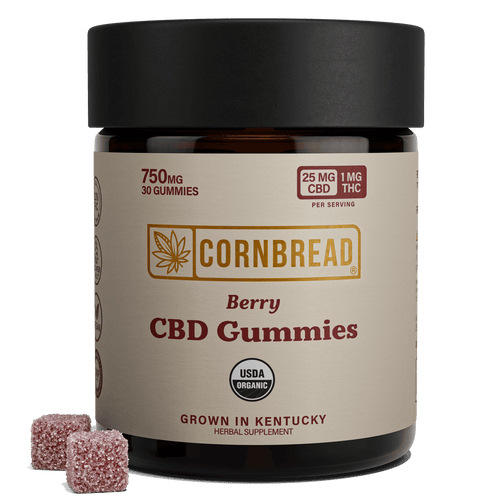
Take CBD gummies responsibly by starting with a low dose and gradually increasing as needed. Opt for high-quality gummies from reputable brands (like Cornbread Hemp!), and check in with yourself periodically to see whether you still feel they’re adding value to your life.
When CBD gummies may feel “habit-forming” even if not addictive
Because they slot well into a daily wellness routine, people notice that CBD gummies become necessary. That’s most common if you’re taking them around the same time of day for relaxation or bedtime.
Just remember that this isn’t a sign of addiction. It’s really just behavior reinforcement, and that’s not a bad thing.